Breaking into the UK rail sector is one of the most stable, secure, and well-paid career paths you can choose today. With major railway infrastructure developments across England, Scotland, and Wales, engineering firms are constantly hunting for fresh talent. However, because working near live railway lines presents real physical dangers, entry into the industry is strictly regulated by Network Rail.
If you want to step onto the ballast, handle physical track tools, replace sleepers, or maintain the permanent way, you must prove you can do so safely. This requires passing a dedicated multi-day training programme designed to teach you the fundamentals of track maintenance and safety protocols. Because this track induction course requires a commitment of your time and focus, a highly common worry for many new starters is: What happens if I fail?
The truth is that the UK rail industry wants you to succeed because there is a massive demand for new workers to fill high-paying rail track jobs. The training is not designed to trick you, but it will absolutely stop anyone who shows they might be a safety risk to themselves or their team. Below is a simple, straightforward breakdown of exactly what happens if you do not pass your initial training modules, how retakes work, and the absolute best way to guarantee a first-time pass.
What Actually Happens If You Fail Your Training?
If you do not pass a specific part of your railway training, it is not the immediate end of your career dreams. Instead, think of it as a temporary pause button. The training is continuous and is generally split into clear segments: classroom theory, safety regulations, and hands-on practical skills. How a failure impacts your progression through the track induction course depends entirely on which section tripped you up.
1. Classroom Exams and Theory Failures
The early part of the training focuses heavily on learning rules, signals, and track layouts. You will learn the core rulebook principles required to earn your Personal Track Safety (PTS) logbook. If you fall just short of the required pass mark on a classroom test, you are covered by standard industry resit policies:
- The First Resit (Short Window): If you fail a written module by just a few marks, your instructor will usually give you feedback on your weak points. Most training centres will allow you to take a quick resit within 48 to 96 hours.
- The Second Resit (Cooling-Off Period): If you unfortunately fail the second attempt, you cannot just jump straight back into the exam room. The system requires you to wait a bit longer, often a few weeks, to thoroughly study the material before making a final attempt.
- The Complete Restart: If you fail a written exam three times in a row, your registration is cancelled. To try again, you will have to re-book, pay the full training fees, and sit the entire classroom course from the very first day.
2. Practical and Tool Handling Failures
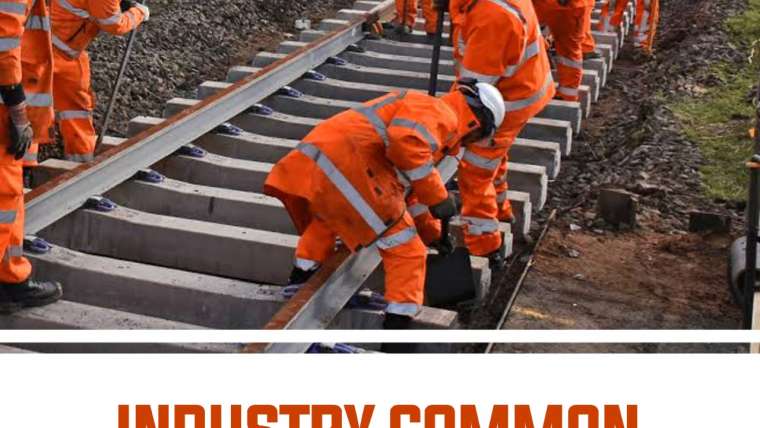
During the practical days of your training, you will go outside to a mock track facility. Here, you will be tested on your ability to use heavy tools like sleeper nips, track jacks, and clipping machines.
If you fail a practical test such as using incorrect lifting postures or failing to fasten a rail clip securely, the trainer will pause your assessment. Because physical tasks rely heavily on muscle memory and strict Network Rail safety standards, a failure here means you must undergo extra coaching sessions. You will not be allowed onto a live railway network until a qualified instructor signs off that you can handle the physical tools safely.
3. Immediate and Automatic Failures (The Five-Year Ban)
While minor mistakes in a classroom can be fixed with a resit, there are two areas where a failure results in an immediate exit from the course with no second chances:
- Drug and Alcohol Screening: You are legally required to pass a medical check and a drug and alcohol test before you can even step foot into a rail training environment. The UK rail industry operates a strict zero-tolerance rule. If you test positive for illegal substances or alcohol, it is an automatic failure. Your details will be instantly flagged on the central rail database, resulting in a mandatory five-year ban from working anywhere on UK rail infrastructure.
- Gross Safety Mistakes: If you act recklessly during practical training such as walking across a rail track without looking, ignoring the instructions of your safety leader, or swinging heavy equipment near other students the trainer will fail you immediately due to behavioural risk. You will be asked to leave the premises right away.
The True Cost of Failing: Who Pays for the Retake?
The financial impact of not passing depends completely on who funded your seat in the classroom.
The Company-Sponsored Route
Many individuals enter the industry through a recruitment agency or a sub-contracting firm that acts as their official industry sponsor. If they paid for your training, they expect you to take it seriously. While many supportive companies will cover the cost of a quick exam resit, they may pull their job offer completely if you fail due to a bad attitude, poor attendance, or a failed substance test.
The Self-Funded Route
If you are paying out of your own pocket to change careers and make your CV look better to employers, a failure hits your wallet directly. You will be responsible for covering any extra exam resit fees charged by your chosen railway training provider. Additionally, because you cannot legally work on the tracks until your certifications are fully complete, every week you spend waiting to retake an exam is a week of lost wages.
The Step-by-Step Method to Pass on Your First Attempt
Passing your training is completely doable if you approach the course with the right mindset. Follow this clear timeline to give yourself the best possible chance of success:
1.Prepare Your Paperwork and Health Checks:Make sure your medical examinations and drug screenings are fully completed well in advance. Check that your profile is properly set up on the central database. Gather your physical identification documents and verify you have valid first aid and manual handling certificates ready, as these are mandatory requirements.
2.Learn the Technical Terms and Layouts: The classroom phase requires you to pay close attention to details. The rail industry uses a lot of technical terms that can feel like a new language. Spend your evenings reviewing track layouts. Make sure you know the difference between the ‘Four-Foot’ (the space between the rails) and the ‘Cess’ (the safe walking path next to the tracks).
3.Treat the Mock Track Like a Live Railway Line: When you move outside to the practical training area, act as if a high-speed train could pass by at any second. Never step directly onto a steel rail; always step completely over it. Listen carefully to your safety supervisor during mock exercises. Showing the trainer that you respect safety rules is the quickest way to earn your pass.
4.Never Avoid Asking Questions: Instructors are veteran railway professionals who want to help you succeed. If terms like track gauge, rail joints, or ballast levels confuse you, speak up immediately. Do not stay silent because you feel embarrassed; asking questions shows the trainer that you genuinely care about doing the job safely.
Terms You Need to Know
To help you get a head start before your first day of class, take the time to learn these fundamental concepts. They form the core of the safety exams you will face:
- The Sentinel Card: This is the most crucial piece of identification in the UK rail industry. It is a smart card that stores all your active safety qualifications. You cannot step onto any Network Rail site without a valid card scanned by a supervisor.
- The Four-Foot: The hazardous space located directly between the two running rails of a track. You must never stand here unless you are under strict, authorized safety protection.
- The Cess: The designated safe walking area along the outside of the railway line. You must walk here whenever you are moving down the track side, keeping clear of the rails.
- Ballast: The heavy, crushed stones that sit beneath the railway tracks. It holds the track firmly in place, drains away rainwater, and absorbs the weight of massive trains.
Pre-Course Packing and Compliance Checklist
Many people get turned away on their very first morning simply because they forgot the right gear. Use this quick checklist to ensure you are fully prepared:
| Equipment Category | What You Must Bring | Why It Is Vital |
| Identification | Original UK Passport or Driving Licence | Photocopies are strictly rejected by training centres. |
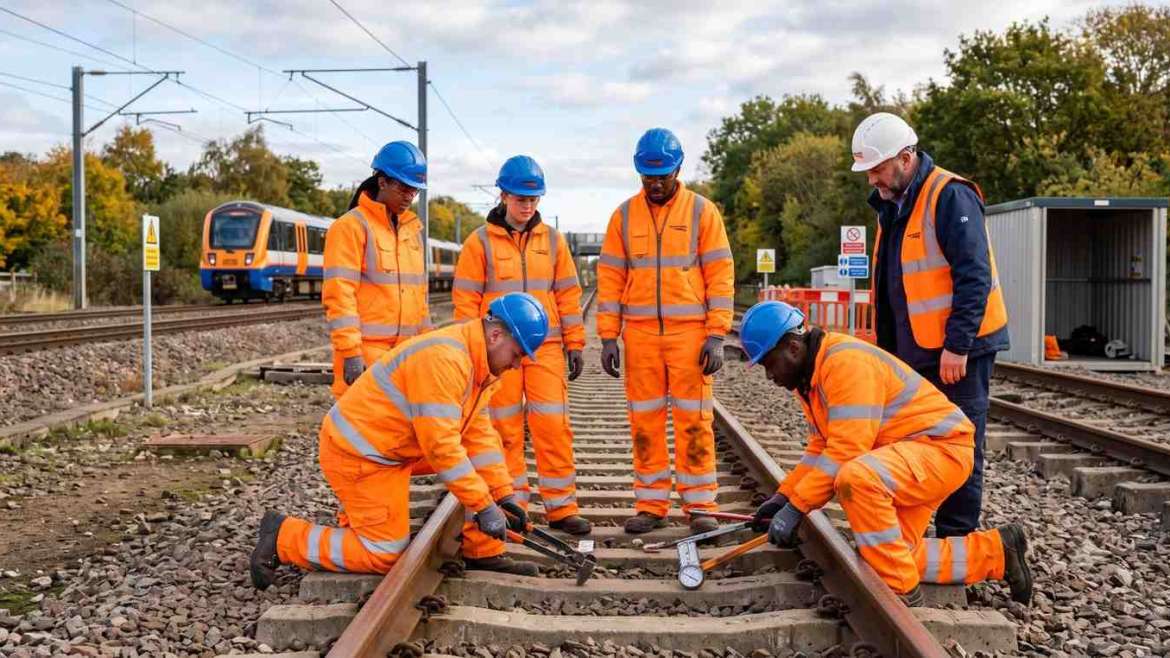
| High-Visibility Gear | Full Orange PPE (Trousers and Vest) | Must meet standard rail visibility specifications. |
| Safety Footwear | Steel Toe-Capped Boots | Must provide midpoint sole protection and a defined heel. |
| Headwear | Blue Hard Hat | A blue hat signifies to everyone on site that you are a trainee. |
Conclusion & Next Steps
Failing your initial training is an avoidable hurdle if you arrive focused, prepared, and ready to listen. The UK railway network is a highly rewarding environment to work in, but it demands absolute respect for safety. If you study the terminology, keep your safety gear immaculate, and listen to your instructors, you will comfortably secure your credentials and unlock access to thousands of stable job vacancies nationwide.
To guarantee you get the finest start to your career, you need to learn from the best. If you are ready to take your first steps toward earning your official credentials, look no further than Quiz Training Ltd. As a gold-standard, accredited track induction course and safety training provider based in the UK, Quiz Training Ltd offers expert-led classroom sessions, high-quality practical training, and seamless support to help you get your credentials on the very first try.
Don’t leave your rail career to chance. Visit Quiz Training Ltd today to browse upcoming course dates, book your safety training, and secure your future in the UK rail industry!
Frequently Asked Questions
If you fail a theory exam or a practical tool assessment, you are usually allowed a quick resit within 48 to 96 hours. However, failing three times means you must retake the entire 10-day course from scratch. Note that failing a drug and alcohol test results in an automatic course failure and an immediate 5-year ban from UK rail infrastructure.
Most UK training providers allow up to three attempts in total for classroom modules. If you fail the first time, you can do a quick rest. If you fail the second time, you enter a mandatory “cooling-off” study period before your third and final attempt.
If your course is funded by a rail agency or company sponsor, they may withdraw their job offer or cancel your Sentinel sponsorship if you fail due to a poor safety attitude or a failed drug screening. For minor exam failures, many supportive sponsors will give you one chance to resit the test.
The pass rate is highly favorable close to 90% for candidates who arrive focused and sober. Most failures do not come from the difficulty of the material, but from safety violations during practical track drills, turning up without correct orange PPE, or failing pre-course medical checks.
Yes. If you fail a course module and your sponsor decides to drop you, you can choose to self-fund your resume or retake the entire course at an approved UK training facility. However, you will still need an active, primary Sentinel sponsor to legally step onto live Network Rail tracks once you pass.