If you work in construction or plan to operate machinery on a UK site, you’ve probably come across the term CPCS training courses at some point. Getting your card is a genuine milestone for your career, but it can feel a little nerve-wracking if you don’t know exactly what to expect from the theory and practical assessments. The reassuring part is that most candidates pass first time, and it usually comes down to solid preparation rather than natural talent. Knowing the test format, practising on the right machinery, and understanding what examiners are actually looking for can make all the difference between feeling anxious and walking in with quiet confidence.
This guide walks you through what CPCS training actually is, who needs it, and nine simple tips to help you pass with confidence.
What is a CPCS Course?
A cpcs course is a formal training and assessment programme designed to prove that an individual can operate specific types of heavy construction plant machinery safely and effectively. The scheme is recognized across the UK construction sector as proof of competence.
The training pathway is divided into clear stages symbolized by card colors:
- The Red Trained Operator Card: This is your initial card, issued once you pass the basic theory and practical tests. It is valid for 2 years, during which you are expected to gain on-site experience and work toward an NVQ certification.
- The Blue Competent Operator Card: Once you complete a relevant National Vocational Qualification (NVQ), you upgrade to the Blue Card. This card proves you are a fully qualified, experienced operator and is valid for 5 years.
Who Needs a CPCS Certification?
If your daily duties involve operating heavy machinery on a construction site, you need a CPCS card. This includes, but is not limited to:
- Excavator operators (both 180 and 360-degree machines).
- Telescopic handler (telehandler) and forklift drivers.
- Crane operators, slingers, and signallers.
- Dump truck and forward-tipping dumper drivers.
- Site supervisors and managers who oversee lifting operations.
Without a valid card, principal contractors following modern safety rules will not allow you to operate machinery on their sites.
How CPCS Assessments Work
Understanding the structure of the CPCS Assessments itself is the first step toward passing it. CPCS testing has two separate components:
The theory test is a touch-screen, multiple-choice assessment delivered at an approved test centre, such as a Pearson VUE centre. It covers machine-specific technical knowledge as well as general health and safety principles relevant to plant operation. Each category has its own dedicated theory paper, and candidates must pass this before progressing to the practical stage.
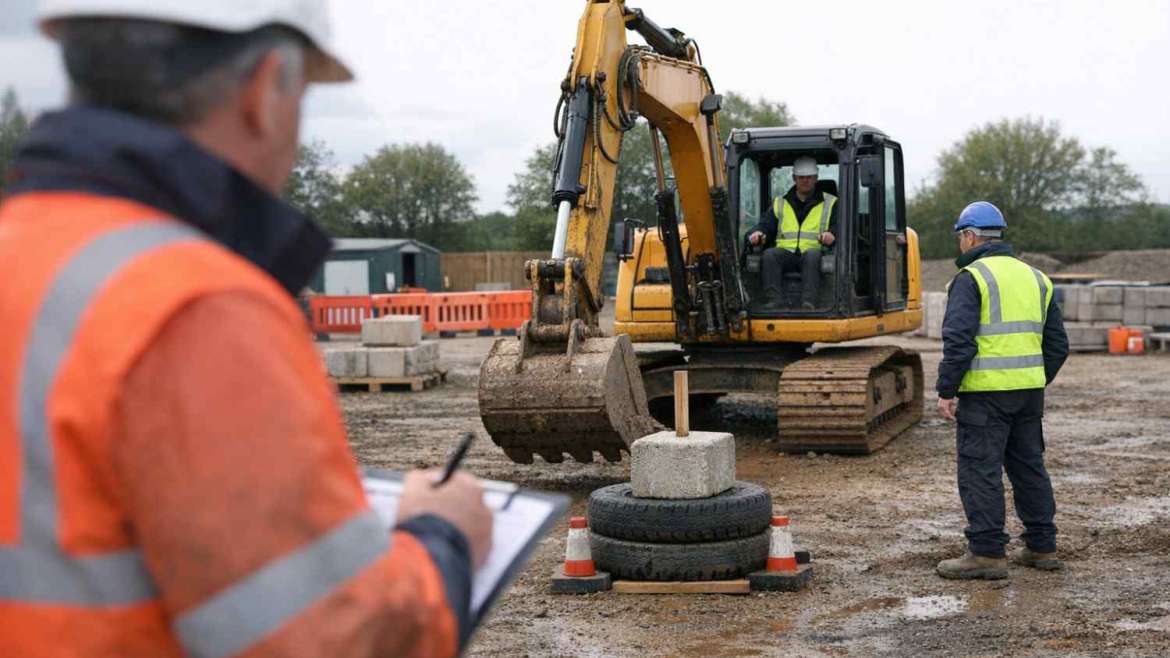
The practical test takes place on the actual machine, usually at a purpose-built test centre, and is observed by an independent tester. The tester evaluates pre-use checks, operating technique, hazard awareness, and correct shutdown procedures. Testing is conducted one-to-one, giving a more thorough assessment of a candidate’s actual competence than group-based testing would allow.
Both elements must be passed to receive a Red card, and all applicants must also hold a valid CITB Health, Safety and Environment test, which is a separate requirement running alongside CPCS.
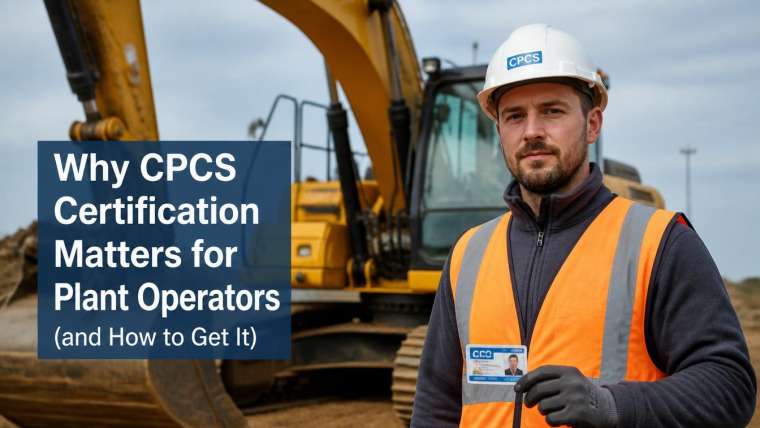
Read More: Why CPCS Certification Matters for Plant Operators (and How to Get It)
Nine Ways to Improve Your Chances of Passing First Time
1. Confirm Your Exact Plant Category Before Revising
Each CPCS category, identified by its own A-code, has a distinct theory paper and practical assessment. Studying general plant knowledge without focusing on your specific machine category, such as a 360-degree excavator (A58/A59) versus a forward-tipping dumper (A09), often leads to gaps in the areas actually being tested.
2. Use Official CPCS Revision Materials
The official CPCS theory test revision guides and category-specific handbooks are written to match the structure, terminology, and depth of the real exam. Generic online quizzes or informal notes from colleagues frequently miss details that the official test expects candidates to know.
3. Attend Every Element of the Course
CPCS training combines classroom instruction with supervised machine time. Missing sessions, particularly ones covering health and safety procedures, often result in gaps that surface later during testing. Trainers typically highlight the areas most commonly misunderstood by candidates, making full attendance directly relevant to exam performance.
4. Prioritise Hands-On Machine Practice
Practical test failures are more often linked to insufficient hands-on time than to a lack of theoretical understanding. Requesting additional practice on pre-use checks, controlled operation, and shutdown procedures during the course addresses this directly.
5. Treat Safety-Critical Knowledge as a Priority, Not an Afterthought
Health and safety awareness is assessed throughout both the theory and practical components. This includes knowledge of exclusion zones, safe working procedures, and correct use of personal protective equipment. Because this knowledge underpins every category, it should form the foundation of a candidate’s revision, not a final add-on.
6. Familiarise Yourself With the Test Format in Advance
The CPCS theory test is delivered on touch-screen software that can feel unfamiliar to candidates who have not used it before. Requesting access to a mock test in the same format during training reduces the risk of losing time or making avoidable errors due to unfamiliarity with the interface rather than a lack of knowledge.
7. Manage Physical and Mental Readiness on Test Day
Fatigue and poor concentration measurably affect performance in both written and practical assessments. Candidates travelling to a test centre, particularly for an early appointment, benefit from adequate rest and food beforehand, since the practical test in particular requires sustained focus and physical coordination.
8. Raise Uncertainties During Training, Not During the Test
Trainers are best placed to resolve confusion while the course is still running. Candidates who ask questions during training, rather than guessing during the assessment itself, consistently report higher confidence and fewer avoidable mistakes on test day.
9. Understand What the Examiner Is Actually Assessing
Practical examiners evaluate more than the mechanical operation of a machine. They assess situational awareness, communication with banksmen or signallers, and appropriate responses to changing site conditions. Reviewing a typical operating sequence in advance, from pre-use checks through to safe shutdown, helps candidates demonstrate this competence naturally under assessment conditions.
Read More: How CPCS Training Helps You Land High-Paying Construction Jobs
Core Qualification and Compliance Summary
Use this quick summary table to keep the structural requirements of the qualification clear in your mind:
| Stage of Qualification | Card Colour | Validity Period | Key Requirement to Pass |
| Trained Operator | Red Card | 2 Years (Non-Renewable) | Pass CPCS Theory & Practical Tests |
| Competent Operator | Blue Card | 5 Years (Renewable) | Complete Category-Specific NVQ |
| Card Renewal | Blue Card Extended | Additional 5 Years | Complete Online CPD/Renewal Requirement |
What Happens If You Don’t Pass First Time?
It’s worth knowing that not passing isn’t the end of the road. You can usually retake the theory or practical test, though there may be a cost and a short waiting period before rebooking. Many candidates who don’t pass the first time simply need a little more hands-on practice or revision time, so use any feedback from your examiner constructively rather than as discouragement.
Keeping Your Card Valid
Once you’ve earned your Red or Blue CPCS card, remember that it doesn’t last forever. Your Blue Competent Operator card is valid for five years, after which you’ll need to complete a CPCS renewal test along with a valid CITB Health, Safety and Environment test to keep working legally on most UK sites. Staying on top of renewal dates avoids any awkward gaps where you can’t access a site or operate machinery you’re otherwise fully qualified for.
Final Thoughts
Passing your CPCS training courses for the first time really comes down to preparation, practice, and taking the process seriously from day one. Know your category, use proper revision materials, get comfortable with the test format, and make the most of every hands-on session during training. Most candidates who follow these habits walk into their test feeling ready rather than anxious. browse upcoming course dates, book your safety training, and secure your future in the UK rail industry!
If you’re looking for a training provider that genuinely helps you succeed, not just pass through a course, Quiz Training Ltd offers expert-led CPCS training courses designed to get you fully prepared for both your theory and practical tests. Don’t put your professional growth on hold. Visit Quiz Training Ltd today to explore our upcoming course dates, secure your training slot, and build a safer, more lucrative career in construction!
Frequently Asked Questions
There’s no strict limit on retakes, but you’ll usually need to pay again and wait a short period before rebooking. Most candidates who fail simply need a bit more practice before passing on their second attempt.
It depends on your experience level. Complete beginners often need 5–10 days of training, while experienced workers switching to a formal card may only need a short refresher before sitting their tests.
Yes. Alongside your CPCS theory and practical tests, you’ll need a valid CITB Health, Safety and Environment test to apply for your card.
The Red Trained Operator card is a temporary card valid for two years while you complete your NVQ. The Blue Competent Operator card is the fully qualified card, valid for five years before you need a CPCS renewal test.
Yes. The novice route is designed for complete beginners and includes full theory and hands-on machine training before you sit your tests.