Imagine sitting in a local cafe, walking through a park, or sitting at your desk at work when someone nearby suddenly collapses, begins choking, or suffers a severe injury. In those high-stress moments, the natural reaction for most people is panic. In the UK, data from the British Red Cross reveals a staggering reality: up to 59% of deaths resulting from injury could have been prevented if basic first aid had been administered before the emergency services arrived.
Yet, despite a bystander being present at the scene 96% of the time, first aid is only attempted in about half of those cases. The reason? A severe lack of confidence and practical knowledge among the general public. Stepping up to learn these vital skills through emergency first aid training isn’t just about fulfilling a corporate check-box; it is one of the most empowering things you can do for your community, your workplace, and your family. This beginner’s guide breaks down exactly why enrolling in a structured training program is the ultimate life-saving tool you can possess.
What is First Aid and Why Does It Matter?
At its core, first aid refers to the immediate, temporary care given to an injured or ill person before professional medical help, like an ambulance crew, arrives on the scene.
First aid is built around three fundamental goals, often referred to by UK safety professionals as the 3 Ps:
- Preserve Life: Executing immediate actions to keep a casualty alive.
- Prevent Worsening: Stabilizing the individual so their physical injuries or medical condition do not deteriorate further.
- Promote Recovery: Taking the initial steps—such as cleaning a wound or comforting a casualty—that will make their long-term healing faster and easier.
Core Skills You Learn as a Beginner
Many people avoid booking a course because they worry the training will be overly complex or medicalized. In reality, modern courses are highly practical, accessible, and structured specifically for absolute beginners.
1. The Primary Survey (DR ABC)
Before you touch a casualty, you must learn how to assess the scene safely. You will be taught the “DR ABC” framework:
- Danger: Ensuring the area is safe for you to enter so you don’t become a casualty yourself.
- Response: Checking if the person is conscious by gently shaking their shoulders and talking to them.
- Airway: Making sure their throat is clear and unobstructed.
- Breathing: Looking, listening, and feeling for normal breathing signs.
- Circulation: Checking for major external blood loss that needs stopping immediately.
2. Cardiopulmonary Resuscitation (CPR) & AED Usage
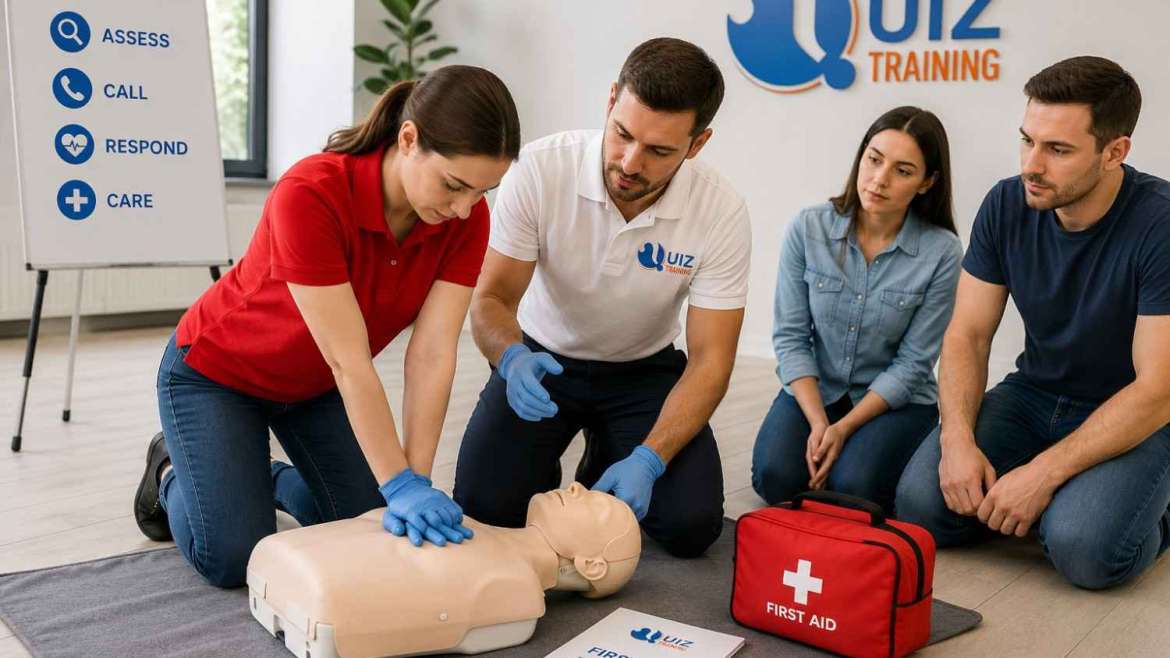
If a casualty is unresponsive and not breathing normally, you must step in. You will practice hands-on chest compressions and rescue breaths on a specialized training dummy. You will also learn how to operate an Automated External Defibillator (AED)—a simple, automated machine found in public spaces across the UK that can shock a stopped heart back into a normal rhythm.
3. Managing Unconscious Casualties
If a person is unconscious but breathing perfectly fine, leaving them flat on their back can cause their tongue to block their airway. You will learn how to roll them smoothly into the recovery position, keeping their airway wide open and allowing fluids to drain safely.
4. Managing Choking and Severe Bleeding
You will learn the physical maneuvers required to clear a blocked airway (the Heimlich maneuver or back blows) and how to apply direct pressure and sterile dressings to stem heavy blood flow.
Read More: How Long Is First Aid Training Valid in the UK?
The Key Benefits of Getting Certified
Investing a small amount of time into a structured first aid training course yields immense rewards for both your personal and professional life.
- Protecting Your Loved Ones: The vast majority of sudden medical emergencies occur within the home. Knowing how to handle a child’s high fever, a partner’s severe burn, or an elderly relative’s stroke symptoms gives you invaluable peace of mind.
- Boosting Workplace Employability: UK employers operate under the Health and Safety (First-Aid) Regulations 1981, meaning they are legally required to provide adequate safety provisions and trained staff on-site. Holding a valid certificate makes your CV instantly stand out to prospective managers.
- Overcoming the Fear of Action: Many people freeze during an accident because they are terrified of doing the wrong thing or worsening the injury. A practical course builds physical muscle memory and removes that hesitation, allowing you to act decisively under pressure.
Choosing the Right Course for Your Goals
Depending on your specific lifestyle or profession, you can choose from a few standard training levels in the UK:
| Course Type | Typical Duration | Best Suited For | Key Skills Covered |
| Emergency First Aid at Work (EFAW) | 1 Day | Low-risk employees (Offices, shops), individuals, and absolute beginners. | CPR, AED use, choking, recovery position, and minor wound care. |
| First Aid at Work (FAW) | 3 Days | High-risk workplaces (Construction, factories) and designated safety officers. | All EFAW skills, plus fracture management, head trauma, and major medical emergencies (strokes, heart attacks). |
| Paediatric First Aid | 2 Days | Parents, childminders, teachers, and nursery staff. | Infant and child CPR, choking protocols, febrile convulsions, and childhood illnesses. |
What a Beginner’s First Aid Course Actually Covers
For someone starting from zero, a beginner-level course such as Emergency First Aid Training typically covers:
- How to assess a scene safely before approaching a casualty
- Recognising when someone is unresponsive and what to do next
- Performing CPR, including hands-only compressions if untrained in rescue breaths
- Safely using a public-access AED
- Managing choking in adults
- Treating shock and severe bleeding
- Placing an unresponsive, breathing casualty into the recovery position
- Knowing what information to give when calling 999
Courses are typically delivered over a single day for the emergency-level qualification, combining short theory sessions with extensive hands-on practice, since first aid genuinely is a physical skill that needs to be rehearsed, not just read about.
Final Thoughts: Be the Difference
At the end of the day, a first aid certificate is much more than a piece of paper to hang on the wall or a box to tick for corporate compliance. It represents a conscious choice to protect the people around you. Emergencies give no advance warning, but by taking the initiative to learn today, you ensure that if the worst should happen, you are ready to stand up, take control, and give someone a second chance at life.
Start Your Journey with Quiz Training Ltd
Ready to build the confidence, skills, and practical knowledge needed to save a life?
At Quiz Training Ltd, we run friendly, engaging, and fully accredited first aid training courses designed specifically for absolute beginners. Our expert UK instructors strip away complex medical jargon and focus entirely on practical, hands-on practice, ensuring you leave our sessions feeling fully prepared to handle any situation. Whether you are looking for a quick 1-day emergency first aid training course to secure your workplace credentials or want to master comprehensive lifesaving techniques, we provide the ultimate supportive learning environment. Contact Quiz Training Ltd today to browse our upcoming local course dates and take your first step toward becoming a certified lifesaver!
Frequently Asked Questions
First aid training provides absolute beginners with the essential skills, practical knowledge, and physical confidence needed to act decisively during a medical emergency. Administering immediate care before paramedics arrive can drastically improve a casualty’s chances of survival and prevent their condition from worsening.
This is a common worry, but structured training teaches you safe, systematic frameworks (like the DR ABC primary survey) to assess risks before taking action. Furthermore, UK law strongly protects individuals who step forward to act as Good Samaritans in good faith during an emergency.
An Emergency First Aid at Work (EFAW) course is a formal, 1-day regulated qualification designed to meet workplace health and safety compliance standards under UK law. A basic beginner’s course may be a shorter, non-regulated session focused purely on personal awareness for home environments.
You can master the fundamental, life-saving basics such as CPR, using an automated external defibrillator (AED), managing choking, and treating severe bleeding in just a single day through a standard 1-day emergency first aid training course.
Once you complete your assessment, a standard workplace first aid certificate remains valid for three years. After this 36-month period, you must take a refresher or renewal course to keep your certified status active and maintain your skills.