
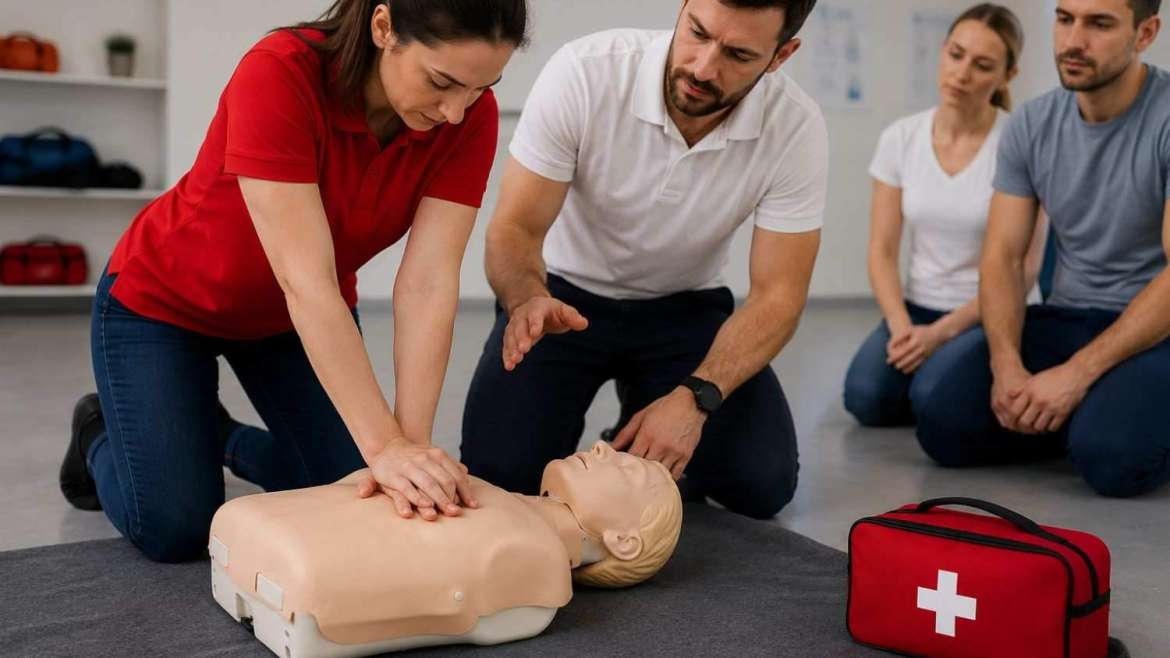
Accidents and sudden medical emergencies can happen at any moment, whether you are working in a bustling corporate office, managing a busy manufacturing warehouse, or working outdoors on a construction site. Having trained personnel on hand to deliver immediate medical assistance can quite literally save a life.
Anyone who has completed a workplace first aid qualification will eventually need to know exactly when it expires and what happens next. This matters not just for personal peace of mind, but for legal compliance, since employers have a duty to make sure their first aiders remain properly qualified at all times. This article sets out, in simple terms, how long first aid training certificates last in the UK, what the renewal process involves, and what happens if a certificate is allowed to lapse.
The Standard Validity of First Aid Certificates
In the United Kingdom, the standard validity period for most primary first aid qualifications is three years from the exact date you complete the course. This timeline is strictly regulated by the Health and Safety Executive (HSE), which serves as the national governing body for workplace health and safety compliance.
Once you complete your assessment and receive your documentation, you are legally recognized as a competent, qualified first aider for exactly 36 months. This three-year rule applies uniformly across the most common safety courses taken by workers, including:
- Emergency First Aid at Work (EFAW): Typically a 1-day course designed for low-risk environments.
- First Aid at Work (FAW): A comprehensive 3-day course tailored for higher-risk commercial sectors.
- Paediatric First Aid: A mandatory course for childcare professionals, teachers, and nannies.
- Mental Health First Aid: Training designed to support individuals experiencing psychological distress.
Why Do First Aid Qualifications Expire?
It might seem inconvenient to retake a course you have already passed, but the three-year expiration window is backed by extensive medical research and industry compliance data. First aid is a hands-on, highly practical skill. If you do not perform these procedures regularly, your muscle memory and knowledge naturally begin to fade.
There are three primary reasons why regulatory bodies enforce a strict expiration date:
1. Skill Fade and Memory Loss
Critical emergency procedures such as performing cardiopulmonary resuscitation (CPR), using an automated external defibrillator (AED), or correctly applying a tourniquet are rarely used daily by the average employee. Studies show that a person’s ability to recall exact chest-compression depths or rescue-breath ratios drops significantly if they do not practice them regularly.
2. Evolving Medical Protocols
Medical science is constantly updating. Global bodies like the Resuscitation Council UK continuously review emergency statistics and refine their guidelines to improve survival rates. What you learned four or five years ago might no longer be considered the safest or most effective best practice today. Re-certification ensures you are always practicing modern, up-to-date techniques.
3. Maintaining Confidence under Pressure
Responding to a severe medical emergency is stressful. If you are uncertain about your skills, panic can cause a dangerous delay in response times. Regularly renewing your credentials gives you the mental confidence needed to step forward and take control during a real crisis.
Read More: How to Pass Your SSSTS Test First Time: Top 10 Practice Tips
What Happens When Your Certificate Expires?
The moment your certificate hits its three-year expiry date, it becomes legally invalid. It is a common misconception that there is a brief grace period allowed after the expiration date, but the HSE does not recognize one.
Allowing your certificate to lapse leads to several serious issues:
- Loss of Status: You are no longer legally recognized as a qualified workplace first aider.
- Compliance Failure: If your business drops below the minimum required number of certified first aiders, the company is in direct breach of the Health and Safety (First-Aid) Regulations 1981.
- Increased Liability: Operating a commercial premises without valid, certified safety personnel exposes the business to severe regulatory fines and legal liabilities if an unmanaged accident occurs on-site.
The Value of Annual Refresher Training
Even though your official certificate remains legally valid for a full three years, the HSE strongly advises all UK employers to provide annual refresher training for their staff.
Year 1: Full Qualification ➔ Year 2: Annual Refresher ➔ Year 3: Annual Refresher ➔ Year 4: Full Requalification
An annual refresher is typically a short, half-day session (around 3 hours) that focuses purely on core lifesaving skills. It does not extend the expiration date of your primary three-year certificate, but it serves as an excellent way to practice CPR protocols, manage severe bleeding, and review unconscious casualty care. Incorporating these brief annual sessions is widely considered industry best practice to ensure your team’s skills remain sharp and reliable between major renewal cycles.
Read More: First Aid Course Assessments: What to Expect and How to Pass
How to Renew Your First Aid Qualifications
The renewal path you need to take depends entirely on the specific type of qualification you currently hold, as well as whether your current certificate is still active.
Renewing a 1-Day Emergency First Aid at Work (EFAW) Certificate
Because the EFAW is a condensed, introductory course, there is no shortened “requalification” version available. To renew your credentials, you simply attend a standard 1-day emergency first aid training course again to get a new three-year certificate.
Renewing a 3-Day First Aid at Work (FAW) Certificate
If you hold the comprehensive 3-day FAW qualification, you do not necessarily have to retake the entire three-day course from scratch. Instead, you can enroll in a streamlined 2-day First Aid at Work Requalification course. This abbreviated course covers the entire curriculum at a faster pace, saving your business time and money.
Crucial Rule: You must book and complete this 2-day requalification course before your current 3-day certificate expires. If you allow your card to expire completely, you lose the right to take the shortened path and must pay for the full 3-day course all over again.
Choosing the Right Path for Your Workplace
Every UK employer is legally required to conduct a workplace first aid risk assessment. The size of your workforce, the nature of your industry, and your physical location determine exactly what type of training your team requires:
| Workplace Risk Level | Example Industries | Staff Size Threshold | Recommended Course Type |
| Low-Risk Environments | Offices, Retail Shops, Libraries | Fewer than 50 employees | At least one EFAW (1-Day) certified staff member |
| Low-Risk Environments | Offices, Corporate Buildings | More than 50 employees | One full FAW (3-Day) certificate per 100 staff |
| High-Risk Environments | Construction, Factories, Engineering | Fewer than 5 employees | At least one Appointed Person with basic training |
| High-Risk Environments | Warehouses, Chemical Plants, Sites | 5 to 50 employees | At least one EFAW or FAW certificate based on specific risks |
Read More: What Is First Aid Training and Why Is It Important in the UK?
Stay Compliant and Prepared with Quiz Training Ltd
First aid competency is not just about ticking a box on a corporate compliance sheet; it is about ensuring your team is fully prepared to act quickly, calmly, and effectively when a real crisis strikes.
Don’t wait for your safety credentials to lapse. At Quiz Training Ltd, we provide comprehensive, fully accredited first aid training options tailored specifically to meet your unique business requirements. Whether you need an introductory emergency first aid training day for your office staff or a specialized requalification course for your designated site managers, our professional, friendly instructors deliver hands-on, engaging courses across the UK. We track your renewal dates for you, making corporate compliance completely stress-free. Contact Quiz Training Ltd today to discuss your training needs, book a local course slot, or arrange a private, on-site training session for your entire workforce!
Frequently Asked Questions
The vast majority of workplace first aid certificates including Emergency First Aid at Work (EFAW) and First Aid at Work (FAW) are valid for exactly three years from the date of course completion. After 36 months, the qualification expires and you must retake training to remain certified.
No, the Health and Safety Executive (HSE) does not recognize a grace period. The exact day your certificate hits its expiry date, it becomes legally invalid. You cannot act as a designated workplace first aider until you complete a requalification course.
An annual refresher is a short, voluntary 3-hour session recommended by the HSE to keep your lifesaving skills sharp and combat memory fade. It does not extend your certificate. A full renewal requires completing a formal 1-day or 2-day course every three years to issue a brand-new legal certificate.
No. To qualify for the shortened 2-day First Aid at Work Requalification course, your current 3-day certificate must still be active. If it has completely lapsed, you are legally required to retake the full 3-day course from scratch.
Because the EFAW is already a condensed 1-day course, there is no shortened requalification version available. To renew an EFAW certificate, you must simply book and attend the standard 1-day course again every three years.