
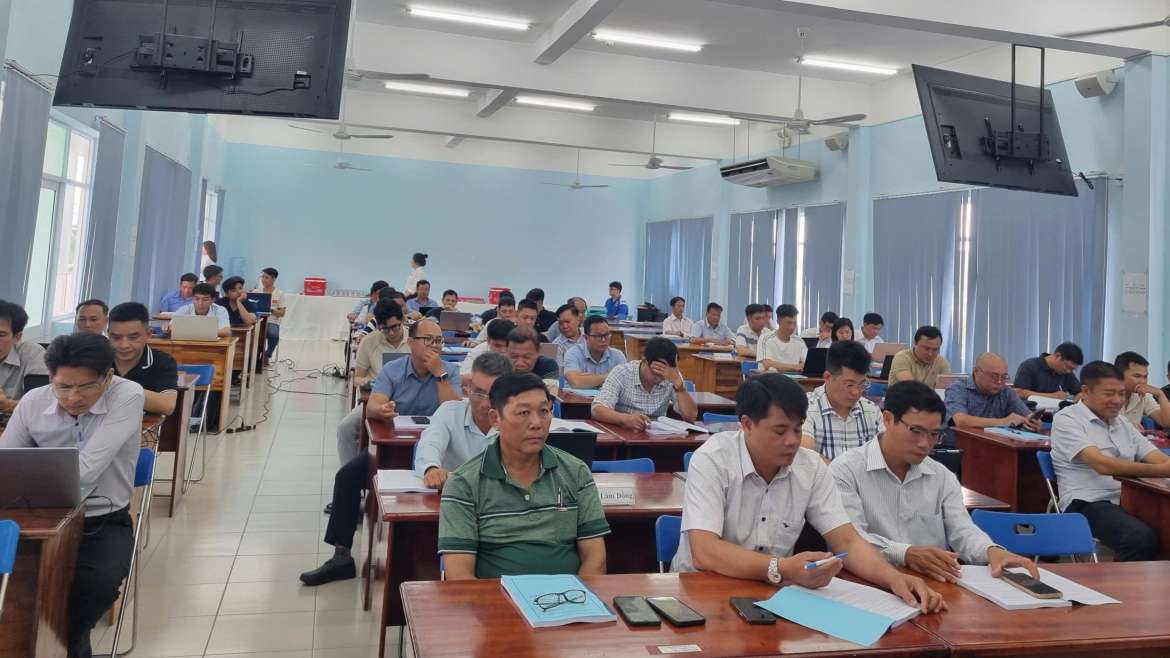
If you’re working your way up to a supervisory role on site or you’ve just been handed more responsibility and need the certification to back it up, the SSSTS is the qualification you need. But before you book your place, it pays to know exactly what the course covers, how the assessment works, and what you’ll walk away with.
The Site Supervisors Safety Training Scheme (SSSTS) is a two-day CITB-accredited course designed for anyone who oversees or coordinates the work of others on a construction site. That means gangers, team leaders, foremen, and newly appointed site supervisors. It’s also a mandatory requirement if you’re applying for the Gold Foreman/Supervisor CSCS card.
Knowing what’s on the syllabus before you walk through the door isn’t cheating. It’s smart preparation. Workers who arrive familiar with the key themes almost always perform better in the final assessment and leave with confidence rather than relief. This guide gives you that head start.
You can also browse the full range of accredited construction courses available through Quiz Training if you want to plan your training pathway alongside the SSSTS.
Core Topics Covered in the SSSTS Syllabus
The SSSTS syllabus is built around the real-world duties of a construction supervisor. The two days are structured to give you both the legal grounding and the practical tools to manage a safe and compliant site team.
Legal Responsibilities
You cannot supervise effectively without understanding the law that governs your role. The course covers:
- The Health and Safety at Work Act 1974 covers your duties as a person in control of others and the employer’s obligations alongside yours.
- The Construction (Design and Management) Regulations 2015 (CDM 2015) covering roles, responsibilities, and documentation requirements for duty holders on site.
- The Management of Health and Safety at Work Regulations 1999 covering the legal requirement for risk assessments and how supervisors fit into that obligation.
- Enforcement powers and the consequences of non-compliance, including improvement notices and prosecutions.
This isn’t taught in abstract terms. The course applies these legal frameworks to realistic site scenarios so you understand what your responsibilities look like on the ground.
Risk Management
This is one of the most practically useful modules on the course. Supervisors are expected to manage risk daily, and the SSSTS gives you a structured approach to doing it properly.
Key areas covered include:
- How to conduct a risk assessment by identifying hazards, evaluating the level of risk, and deciding on appropriate control measures.
- Method statements covering what they are, how to read them, and how to make sure your team is working within the agreed safe system of work.
- The hierarchy of control from elimination at the top through substitution, engineering controls, administrative controls, and PPE. You’ll understand why PPE sits at the bottom, not the top.
- Reviewing and updating risk documentation when conditions on site change.
This module is consistently one of the most assessment-heavy areas, so it’s worth giving it extra attention in your preparation.
On-Site Safety Control
This section covers the day-to-day hazards that supervisors are expected to recognize, monitor, and manage. The syllabus includes:
- Occupational health hazards such as noise, vibration (including Hand-Arm Vibration Syndrome), dust, and manual handling risks.
- Asbestos awareness, including the legal duty to assume asbestos is present in older buildings, what to do when suspect material is identified, and the requirement for a licensed contractor.
- COSHH (Control of Substances Hazardous to Health) covering identifying hazardous substances on site, reading data sheets, and ensuring correct storage and handling.
- Scaffolding and working at height under the Work at Height Regulations 2005, including inspection requirements and what supervisors must check before allowing work to proceed.
- Excavation safety covering collapse prevention, underground services, and the inspection regime required before workers descend.
- Welfare facilities, fire prevention, and site security.
The breadth of this module reflects the reality of the supervisor’s role. You need to know enough about each hazard type to spot a problem before it becomes an incident.
Communication and Leadership
A supervisor who understands health and safety but cannot communicate it clearly is a risk in themselves. This module focuses on the skills that make the difference between a site team that follows procedure and one that genuinely understands why it matters.
Topics include:
- Toolbox talks covering how to plan, deliver, and record an effective toolbox talk that engages your team rather than switching them off.
- Induction training including what must be covered when a new worker arrives on site and how to document it correctly.
- Giving instructions clearly, including communicating with workers whose first language may not be English, and making sure critical safety information lands.
- Reporting structures and escalation, knowing when to raise a concern and who to raise it with.
This is often the module that surprises candidates. It’s not soft skills for the sake of it. It’s a core part of your legal responsibility as a supervisor to ensure your team understands and follows safe working practices.
The SSSTS Assessment: What to Expect
At the end of the second day, you’ll sit a written test. It’s multiple choice in format and covers all the main topic areas from the two days of training.
The questions are designed to test practical understanding rather than rote memorization. You’ll be presented with realistic site scenarios and asked what a supervisor should do, what the correct legal requirement is, or what the appropriate control measure would be.
There is no trick to passing other than engaging fully with the course content as it’s delivered and reviewing the key themes before you sit down. If you want a more detailed breakdown of what to focus on, our guide on how to pass your SSSTS test first time walks through the most commonly tested areas and the preparation strategies that work.
Candidates who struggle are almost always those who treated the two days as passive, sitting back and expecting the content to sink in without engagement. Ask questions, take notes, and treat the case studies seriously. The assessment reflects the course, so working through it as an active participant is the most effective preparation you can do.
Career Progression: Moving Beyond the SSSTS
Completing your SSSTS does more than tick a box. It positions you as a competent, certified supervisor with a formal grounding in health and safety law, risk management, and site leadership. That matters to employers, and it matters for your own professional standing.
For many workers, the SSSTS marks the beginning of a clear progression route:
- CSCS Gold Card. The SSSTS is a recognized route to the Gold Foreman/Supervisor card, which opens doors on major commercial and public sector contracts.
- Increased responsibility on site. Employers actively look for supervisors who hold formal certification, particularly on large schemes with strict supply chain requirements.
- A foundation for further training. Once you’ve completed the SSSTS and built supervisory experience, the natural next step is progressing toward the site management level.
That next step is the SMSTS (Site Management Safety Training Scheme), a five-day CITB course for those moving into site management positions. If you’re already thinking about that trajectory, exploring SMSTS Training is worth doing now so you understand what the pathway looks like and how your SSSTS experience feeds into it.
The construction industry rewards those who invest in their development. The SSSTS is a recognized signal to employers that you take your responsibilities seriously and have the knowledge to back it up.
Conclusion
The SSSTS is a structured, practical two-day course that gives supervisors a solid command of health and safety law, risk management, on-site hazard control, and team communication. It’s built around real supervisory duties, assessed in a way that tests applied understanding, and recognised across the UK construction industry as the standard qualification for anyone leading a site team.
If you’re preparing to take the course, knowing what’s on the syllabus puts you in a stronger position from the moment the first day starts.
Quiz Training offers accredited SSSTS courses with high pass rates and experienced tutors who know the construction industry from the ground up. Whether you’re booking your first course or preparing for assessment, the team is ready to help you get certified and get on with the job.
Book your SSSTS course today and take the next step in your construction career.
Frequently Asked Questions
The SSSTS course covers four core areas: legal responsibilities under UK health and safety law (including the Health and Safety at Work Act 1974 and CDM Regulations 2015), risk management and method statements, on-site safety hazards such as COSHH, asbestos awareness, scaffolding, and excavations; and communication skills, including how to deliver toolbox talks and site inductions.
The SSSTS is a two-day CITB-accredited course. The assessment takes place at the end of the second day and is a multiple-choice written test.
The SSSTS is designed for gangers, team leaders, foremen, and newly appointed site supervisors who are responsible for overseeing the work of others on a construction site. It is also required for those applying for the Gold Foreman/Supervisor CSCS card.
Yes. The SSSTS assessment is a multiple-choice written test taken at the end of the second day. It tests practical understanding of supervisory duties, health and safety law, and risk management across realistic site scenarios.