The United Kingdom relies heavily on its rail network to keep businesses running, passengers moving, and the economy growing. Right now, London stands at the absolute center of this infrastructure boom. Massive regional developments like High Speed 2 (HS2), essential London Underground modernizations, and major overhauls of busy transport hubs create constant vacancy boards. Rail contractors face a persistent challenge: they cannot find enough qualified, safety-trained individuals to fill essential track roles.
If you seek a stable, well-paying career path that does not require a university degree, enrolling in railway training courses in London offers an exceptional entry point. However, entering this industry requires navigating a strict compliance system. The rail environment carries significant risks, so regulatory bodies enforce absolute standards for entry. This comprehensive guide breaks down exactly what you will encounter during your training, how the licensing systems operate, what you will learn in the classroom, and how to successfully secure your first job on the tracks.
1. The Gateway to the Rails: Understanding the Sentinel System and PTS
Before you buy work boots or look at a course calendar, you must understand the central compliance mechanism of the British rail industry: the Sentinel System. Managed by Network Rail, Sentinel is a secure, national database that tracks the identities, medical fitness, and active qualifications of every single person working on the UK rail infrastructure.
When you complete your training, you receive a physical and digital Sentinel Card. Think of this card as your professional passport. When you arrive at a work site anywhere in London, the site supervisor scans your card. If your card is invalid, or if a specific qualification has expired, the system locks you out, and you cannot step onto the site.
To get your very first Sentinel Card, you must pass the Personal Track Safety (PTS) qualification. This is the mandatory entry-level certification for the entire industry. The standard modern PTS course takes two days to complete and splits evenly between classroom theory and practical track experience. You cannot legally step near a live track environment anywhere in the UK without a valid PTS log on your Sentinel profile.
2. Mandatory Pre-Prerequisites: Medicals and Screenings
You cannot simply show up to a training facility and sit in a classroom. Because working near moving trains demands high situational awareness, the rail industry uses a strict pre-screening process. You must clear two major hurdles before a training provider allows you onto a PTS course.
The Network Rail Approved Medical Exam
You must book an appointment with an officially registered occupational health doctor. The doctor runs a series of specific checks to confirm you are physically capable of working in a high-risk environment:
- Visual Acuity: You must pass a distance vision test (with or without glasses) and a comprehensive color-blindness check. If you cannot instantly tell the difference between railway red, green, and yellow signals, you cannot work on the track.
- Hearing Test: An audiogram measures your ability to hear warning whistles and horns over the noise of heavy machinery and passing trains.
- General Mobility: The doctor checks your reflexes, joints, and balance to ensure you can quickly scramble up steep ballast banks or jump out of the way of an oncoming train.
The Drug and Alcohol Screening
The UK rail network enforces a strict zero-tolerance policy regarding substance use. This screening uses urine or hair samples to detect illicit substances and alcohol.
Critical Warning on Failures: If you fail this screening, the testing provider logs a positive result directly against your National Insurance number on the central Sentinel database. This triggers an automatic, unappealable five-year ban from the entire rail industry. Treat this screening with absolute seriousness.
3. Inside the Classroom: Core Training Modules
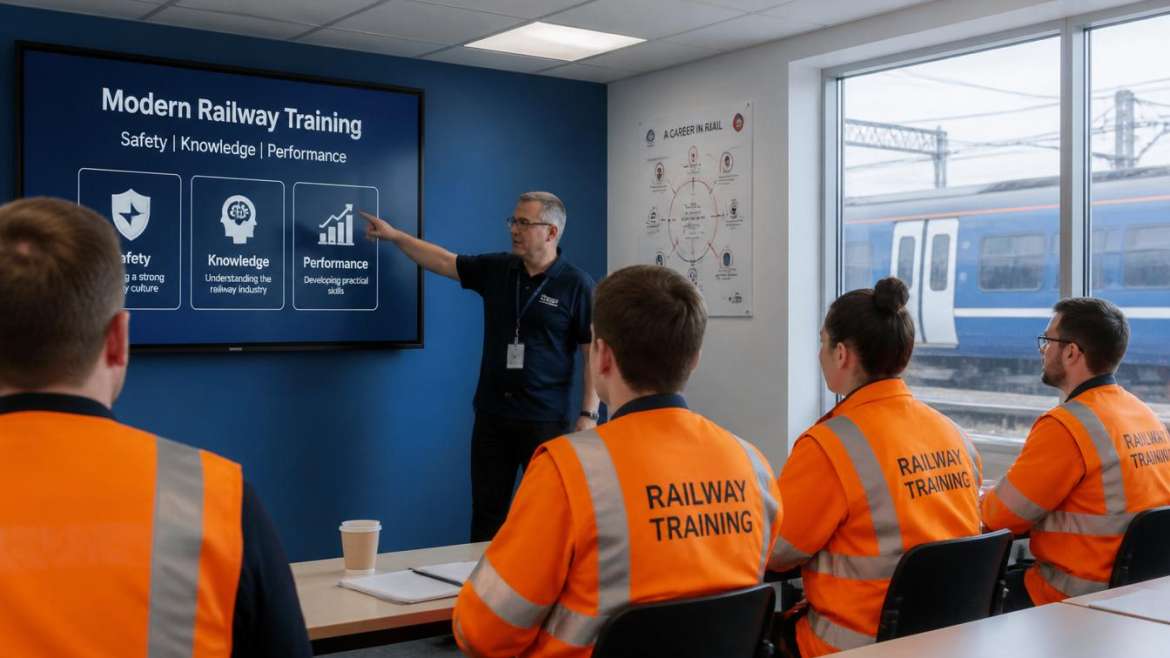
Once you pass your medical and screening, you begin the actual training. Modern rail academies in London use a blend of interactive software, rule-book analysis, and physical equipment demonstrations. The curriculum focuses heavily on identifying hazards and mastering safety procedures.
High-Voltage Traction Systems (AC and DCCR)
London’s rail infrastructure features complex power networks. Your course covers the specific safety protocols for the two main types of electrical systems:
- Overhead Line Equipment (OLE): These lines carry 25,000 volts of Alternating Current (AC) above the train. You will learn the “overhead safety distances” and how to spot broken wires or dangling components that could ground electricity through your body.
- Direct Current Conductor Rail (DCCR): Commonly called the “third rail,” this system powers the majority of South London’s overland routes and the London Underground. It carries 650 to 750 volts of deadly direct current right next to the running tracks. Instructors teach you how to step safely over these rails using insulated tools and specialized footwear.
Track Geography and the “Danger Zone”
You will learn to read the physical layout of a railway line like a map. Trainers teach you to identify key components such as points, switches, fishplates, and sleepers. A massive portion of your score relies on understanding boundaries:
- The Danger Zone: Any area within 3 meters of a live track line where trains can pass.
- The On-Track Zone: The physical space between the two running rails.
- Positions of Safety: Designated areas (like track recesses or wide embankments) where you can stand safely while a train passes at full speed.
Command Structure and Communication Protocols
Miscommunication causes accidents on the railway. Therefore, the industry uses a rigid, military-style communication structure. You will practice the official rule book protocols, learning how to state your name, location, and job role clearly. You will practice repeating instructions back to a Controller of Site Safety (COSS) or a Signaller word-for-word to verify that you fully understand a safety order before executing it.
4. The Practical Assessment: The Live Track Visit
The second day of your training program moves out of the classroom and onto an active track section or a dedicated, simulated rail academy yard. This is where you prove you can apply your knowledge under real-world pressure.
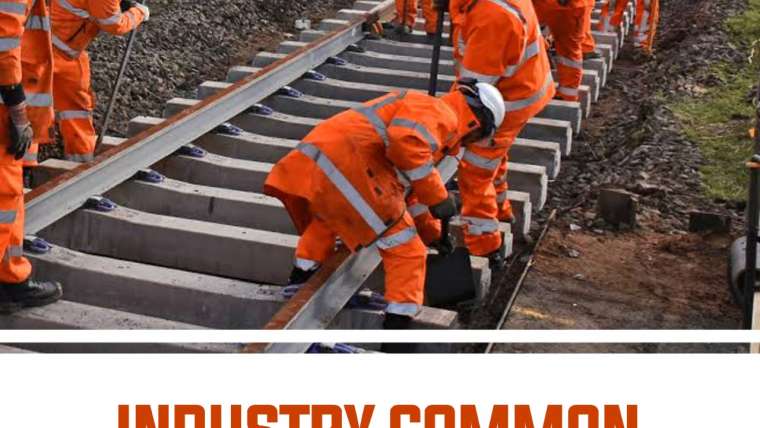
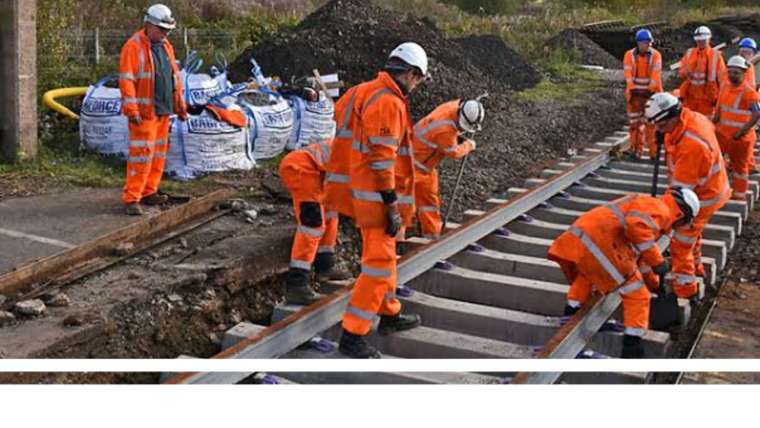
Dressed in full high-visibility orange PPE (including an alpha-coded hard hat, steel-toe boots, and reflective trousers), an assessor guides your group onto the ballast. You will perform real-world safety drills, including:
- Demonstrating how to look both ways and cross a track safely.
- Practicing group walking patterns along the lineside.
- Responding instantly to a Lookout’s warning horn by moving to a position of safety within the mandatory ten-second window.
- Using emergency flags and detonators (small explosive capsules placed on rails to warn oncoming trains of danger ahead).
5. UK Career Tracks: Roles, Salaries, and Advancement
Completing your railway training in London immediately qualifies you for several entry-level infrastructure roles. Because rail projects run 24/7, many workers earn significant premiums by taking night shifts, weekend blocks, or bank holiday assignments.
| Job Title | Average London Starting Salary | Core Responsibilities |
| Track Operative | £28,000 – £35,000 / year | Uses manual tools and machinery to replace rails, adjust sleepers, clear debris, and pack track ballast. |
| Site Warden | £32,000 – £38,000 / year | Stands at the edge of the work zone to watch the crew and shout warnings if anyone accidentally steps toward the live tracks. |
| Track Lookout | £35,000 – £42,000 / year | Stands at a distance with flags, horns, or digital sensors to spot oncoming trains and signal the crew to clear the area. |
How to Accelerate Your Career
A basic PTS card gets you on the track, but adding secondary certifications significantly increases your daily pay rate. Consider expanding your skill set with these advanced modules:
- Small Plant Machinery Tickets: Qualifications to operate hydraulic jacks, rail saws, and heavy impact wrenches.
- Lookout (LKT) and Site Warden (IWA) Certifications: Steps up the safety leadership ladder.
- Controller of Site Safety (COSS): The ultimate site supervisor role, responsible for setting up safe zones and signing off on track clearances. COSS professionals routinely earn over £50,000 per year in London.
6. The Ultimate Trap: Why Candidates Fail
The practical PTS assessment has a surprisingly high failure rate, but not because the technical information is overly complex. Candidates almost always fail due to communication errors or safety infractions during practical tests.
The rail safety culture operates on a binary pass/fail scale. There is no such thing as a “partial pass” when it comes to life-saving rules. If an assessor gives you a safety brief and you fail to repeat the key details back to them accurately, they will fail you on the spot. If you step over a third rail incorrectly or drop a tool in the danger zone during an assessment, your course ends immediately. The industry values precision, calm nerves, and strict adherence to protocol above all else.
Build Your Confidence Before You Pay for a Course
The absolute smartest way to guarantee a first-time pass is to familiarize yourself with the language, symbols, and rules before you step into the training center.
Do you know your safety distances? Can you identify an AC overhead line hazard? Take our free online mock PTS practice quiz today to test your current knowledge, correct your mistakes, and ensure you pass your official Sentinel exam on your very first try!
Frequently Asked Questions
Yes, people with criminal records can often work within the UK rail industry, provided convictions do not involve serious violence or security risks. Contractors assess applications individually during Sentinel registration, and honest disclosure during onboarding is always extremely important.
A standard PTS qualification normally remains valid for two years. Before expiry, workers must complete a PTS recertification course to remain active. Allowing the qualification to expire completely usually means retaking the full Personal Track Safety course again.
No, railway environments require specific PPE that meets rail industry standards. Candidates must wear approved orange high-visibility clothing compliant with RIS-3279-TOM regulations, as yellow construction PPE is not permitted on or near active Network Rail infrastructure.
If you fail the initial color vision assessment, you may be referred for further testing. Severe colour blindness can result in restricted certification, limiting access to active track roles while still allowing eligibility for certain off-track railway positions.
Training courses may be completed by candidates aged 16 or 17, but workers must usually be at least 18 years old to access live railway tracks or hold unrestricted Sentinel certification for active rail environments in the UK.